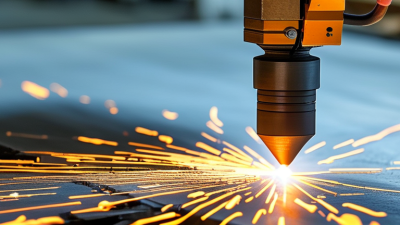
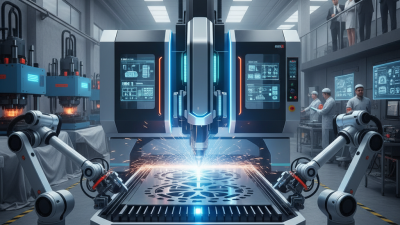
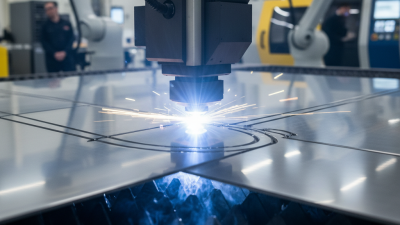
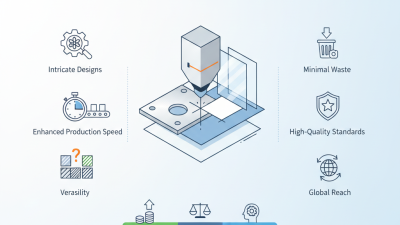
As manufacturers demand faster production and cleaner finishes, custom laser cutting continues to shape modern fabrication. In 2026, businesses can choose from several service types, each suited to different materials, tolerances, and production volumes. A thin stainless steel panel may need a different process than a thick aluminum bracket or a detailed acrylic sign.
The most common options include sheet metal cutting, tube and pipe cutting, plate cutting, precision micro-cutting, and three-dimensional laser cutting. Fiber lasers often handle reflective metals efficiently, while CO2 systems remain useful for selected nonmetal materials. Service quality depends on more than machine power. Operators must control focus, heat input, assist gas, edge quality, and dimensional accuracy.
Small details matter.
Experienced providers review technical drawings before production. They check material grade, thickness, bend allowances, tolerances, and surface requirements. Reliable suppliers also document inspections and communicate realistic lead times. Certifications can support confidence, but they do not replace practical workmanship or careful sampling.
This guide explores the top types of custom laser cutting services for 2026. It connects each service with common applications, advantages, limitations, and selection considerations. Some projects may appear simple but reveal unexpected challenges during production. A narrow slot can distort under heat. A polished surface can expose tiny scratches. Even experienced teams must reassess assumptions when designs, materials, or quantities change. That uncertainty deserves attention. The right service balances precision, cost, speed, safety, and repeatability, rather than promising perfection through equipment alone.
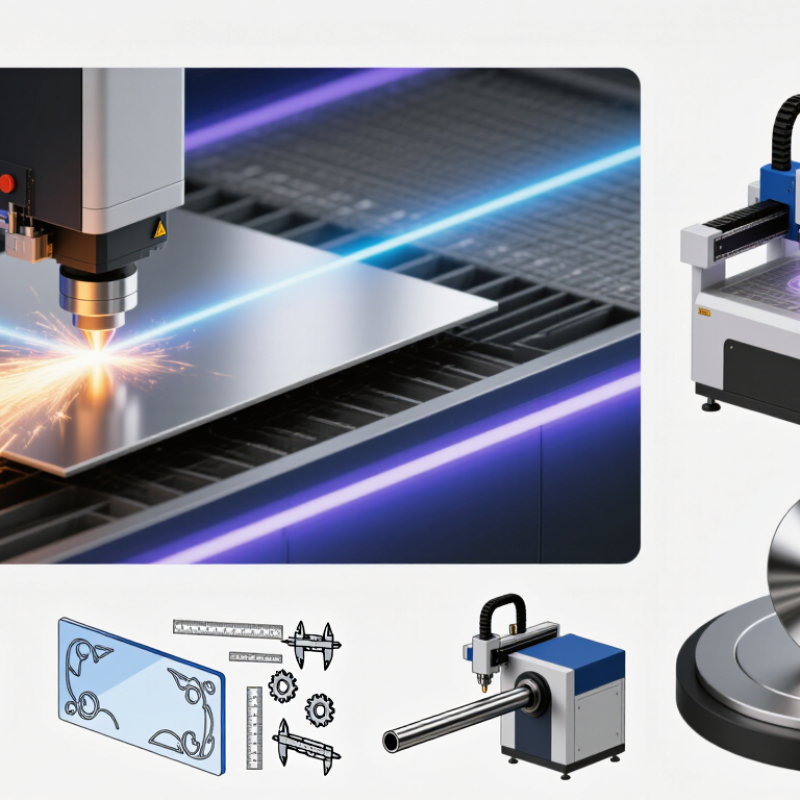
Custom laser cutting is a digital manufacturing service for producing precise parts from customer-supplied drawings. Typical materials include steel, stainless steel, aluminum, brass, acrylic, and plywood. Fiber lasers usually handle metal sheets and tubes, while CO2 systems remain useful for many nonmetal materials. Common service types include sheet cutting, tube cutting, prototype production, and three-dimensional profile cutting.
The workflow starts with a CAD file, material selection, and tolerance review. Software then nests parts to reduce waste and calculates the cutting path. A focused beam melts or vaporizes the material, while oxygen or nitrogen removes debris from the kerf. Operators check edge quality, dimensions, burrs, and heat distortion. Small details matter.
MarketsandMarkets valued the global laser cutting machine market at about 6.8 billion dollars in 2023 and projected strong growth through 2028. Grand View Research also identifies automation and high-precision fabrication as major market drivers. These figures reflect equipment demand, not every outsourced service, so they require careful interpretation. That distinction is often missed.
A reliable provider confirms thickness limits, achievable tolerances, file formats, and inspection requirements before production. ISO 9013 provides a useful reference for thermal-cutting quality classification. Yet, standards cannot replace practical testing. A perfect drawing may still fail if the material varies, the heat zone expands, or the design ignores bend clearance. Good custom work allows room for that reality.
2026 Top Types of Custom Laser Cutting Services
Major Types of Custom Laser Cutting Technologies in 2026
Custom laser cutting is moving toward specialized processes rather than one universal machine. Grand View Research estimates the laser cutting machine market at about US$6 billion in 2023, with annual growth above 7% through 2030. Definitions vary between reports, so forecasts deserve careful reading.
Fiber laser cutting leads metal fabrication because it delivers high speed, focused beams, and lower operating energy. It suits stainless steel, aluminum, brass, and mild steel. A 6 kW system can cut production sheets quickly, but thicker materials may show dross or tapered edges. The cut is not always perfect.
CO2 laser technology remains useful for acrylic, wood, plastics, and some nonmetallic materials. Its longer wavelength interacts effectively with many organic surfaces. Solid-state and Nd:YAG lasers support precise work on thin metal, small components, and detailed marking. Ultrafast lasers add another option for heat-sensitive parts, where short pulses reduce the heat-affected zone.
MarketsandMarkets identifies automation, electric mobility, and demand for complex components as major growth drivers in laser processing. Yet a technology choice should begin with material tests, not a sales brochure. Engineers should inspect kerf width, edge roughness, piercing time, and dimensional tolerance. Even experienced operators can overlook reflective surfaces, changing gas pressure, or warped sheets. A useful trial includes real production thickness, not only a clean sample.
Major custom laser cutting technologies use different laser wavelengths. The wavelength influences material interaction, beam delivery, and the types of precision cutting applications each technology commonly supports.
Values show representative operating wavelengths: CO₂ lasers commonly operate at 10,600 nm, fiber and Nd:YAG systems near 1,064–1,070 nm, diode systems around 940 nm, and excimer systems at ultraviolet wavelengths such as 308 nm. Actual cutting performance depends on power, optics, material, thickness, and machine configuration.
Custom laser cutting begins with material behavior, not only a digital drawing. Carbon steel and stainless steel suit brackets, panels, and machine guards. Grand View Research estimated the laser cutting machine market above USD 7 billion in 2023. Its report also projected steady growth through 2030. That growth reflects broader fabrication and small-batch production. Thin metal cuts cleanly, but heat can alter edge color and flatness.
Aluminum performs well with suitable power and calibrated settings. Copper and brass require extra care because their reflective surfaces can disrupt the laser beam. Acrylic creates polished edges for signs, enclosures, and display parts. Wood, plywood, paperboard, and selected textiles support prototypes and decorative components. A 2024 materials-processing report identified metal as the leading industrial laser application segment. Still, every alloy behaves differently. Thickness charts are not enough.
PVC and unknown coated sheets should be rejected because dangerous fumes may form. Polycarbonate can melt, haze, or crack instead of cutting neatly. Test coupons remain valuable. They reveal warping, rough edges, and hole distortion before production begins. In practical work, faster settings sometimes reduce quality. That tradeoff deserves honest review. Reliable service records the alloy grade, thickness, lens condition, assist gas, and final measurements.
Choosing a custom laser cutting service starts with your material, thickness, and required finish. Steel, aluminum, acrylic, and wood react differently to heat. Ask which laser system suits your material and expected production volume. Request a test cut using the actual material grade. Examine the edge, corners, holes, and surface discoloration. Be specific. A clean edge can reduce sanding and assembly time.
Review the provider’s technical controls before approving production. A reliable team should accept accurate CAD files and confirm kerf, tolerances, and minimum hole sizes. Ask for inspection records, calibration details, and material traceability. Experienced technicians explain process limits before cutting begins. They should not promise impossible tolerances. That honesty matters. Check how they handle drawing revisions, damaged parts, and quality disputes.
Price alone can mislead you. A clear quotation should list material, setup, cutting, deburring, packaging, and delivery costs. Confirm lead times and available production capacity. For prototypes, choose a service that welcomes small adjustments. For repeat orders, request sample measurements from several batches. No process is perfect. A narrow slot may close slightly after heat exposure, even when the drawing looks correct. I would leave room for review, because rushing the first order can create expensive corrections later.
Custom laser cutting quality begins with material control, not the machine alone. Carbon steel, stainless steel, aluminum, and copper react differently to heat. Thickness also changes edge quality, kerf width, and piercing time. ISO 9013 classifies thermal-cutting quality through edge geometry, roughness, and tolerances. That standard is useful, but it does not replace a real sample inspection.
Cost usually follows material usage, machine time, finishing, and order complexity. A 2024 industrial manufacturing survey reported that 94% of manufacturers viewed smart production technology as important for competitiveness. Digital nesting can reduce sheet waste, while automated inspection may catch burrs before shipment. Still, software savings can disappear when drawings change repeatedly. A perfect estimate is rare.
Delivery time depends on capacity, programming, material availability, and secondary work. Industry logistics reports in 2024 continued to identify material shortages and volatile lead times as major production risks. A simple flat bracket may ship quickly. A thick copper part with tight tolerances may require slower cutting, deburring, and dimensional checks. Ask for a documented tolerance range, first-article inspection, and a realistic production schedule. Faster is not always better.
| Service Type | Typical Materials | Common Thickness or Size | Typical Accuracy | Typical Edge Quality | Relative Cost | Typical Lead Time | Main Quality and Cost Factors |
|---|---|---|---|---|---|---|---|
| Fiber Laser Sheet Cutting | Carbon steel, stainless steel, aluminum, brass, copper | Approximately 0.5–25 mm, depending on material and machine power | About ±0.05–0.15 mm for standard production work | Clean, narrow kerf; low heat-affected zone on thin and medium sheet | Medium | 3–10 business days | Material grade, sheet flatness, assist gas, laser power, pierce strategy, nesting efficiency, and required tolerances |
| CO₂ Laser Nonmetal Cutting | Acrylic, wood, plywood, cardboard, leather, fabric, rubber, selected plastics | Approximately 0.5–25 mm, varying substantially by material | About ±0.10–0.30 mm for many flat-sheet applications | Polished edges on some acrylics; possible charring, discoloration, or melting on other materials | Low–Medium | 2–8 business days | Material composition, moisture, protective film, focal length, ventilation, cutting speed, and whether secondary cleaning is required |
| Tube and Pipe Laser Cutting | Round, square, rectangular, and oval steel or aluminum tubing | Commonly 10–250 mm outside diameter or across-flats dimension | About ±0.10–0.25 mm for typical features | Consistent holes, slots, miters, and end cuts with minimal secondary drilling | Medium–High | 5–15 business days | Tube straightness, profile size, chuck setup, rotational accuracy, part nesting, loading time, and internal slag control |
| High-Precision Thin-Sheet Cutting | Stainless steel, spring steel, nickel alloys, titanium, copper alloys | Approximately 0.05–3 mm sheet or foil | About ±0.02–0.08 mm with controlled process conditions | Very fine kerf and limited distortion; small features require careful heat management | High | 7–20 business days | Beam quality, focus stability, sheet handling, micro-feature design, burr limits, inspection requirements, and material traceability |
| Thick-Plate Laser Cutting | Carbon steel, stainless steel, aluminum, and selected alloy plate | Approximately 12–40 mm; maximum capacity varies by alloy and equipment | About ±0.15–0.40 mm for typical profiles | Possible taper, dross, and larger heat-affected zones than thin-sheet cutting | High | 7–20 business days | Plate thickness, material chemistry, oxygen or nitrogen selection, nozzle condition, piercing time, and post-cut deburring |
| 3D and Robotic Laser Cutting | Formed sheet metal, hydroformed tubes, welded assemblies, automotive and industrial components | Complex parts typically up to approximately 1–3 m working envelope | About ±0.20–0.50 mm, depending on calibration and part geometry | Access-dependent; can cut features on multiple planes without dedicated dies | High | 10–30 business days | 3D scanning or CAD accuracy, fixture rigidity, robot calibration, surface reflectivity, part repeatability, and programming time |
| Laser Cutting of Composites and Laminates | Fiber-reinforced polymers, adhesive laminates, thin composite panels, selected insulation materials | Approximately 0.2–10 mm, depending on composition and reinforcement | About ±0.10–0.30 mm for stable, flat materials | May show delamination, resin vapor, fiber pull-out, or edge discoloration | Medium–High | 7–20 business days | Resin type, fiber orientation, toxic or corrosive fumes, extraction system, heat input, protective masking, and edge-sealing needs |
| Prototype and Short-Run Laser Cutting | Most compatible metals, plastics, wood, acrylic, and engineered sheet materials | Usually 1–100 parts per design, within the selected material capacity | Typically ±0.10–0.30 mm unless precision inspection is specified | Production-ready edges subject to material and process; finishing may be optional | Medium–High | 2–10 business days | Setup and programming are spread over fewer parts; drawing clarity, file preparation, material availability, and revision frequency strongly affect cost and speed |
| Production Laser Cutting | Standardized steel, stainless steel, aluminum, brass, copper, and approved nonmetals | Hundreds to thousands of parts, within machine and material limits | Typically ±0.05–0.20 mm with process control | Repeatable edges and dimensions; automated sorting and deburring may be available | Low–Medium per Part | 10–30 business days | Order quantity, nesting yield, material utilization, machine uptime, inspection plan, packaging, and stable revision-controlled drawings |
| Reference notes: Values are representative planning ranges for custom work and are not guaranteed specifications. Actual quality, price, and delivery depend on material grade, part geometry, order quantity, tolerances, surface requirements, finishing, inspection, shipping, and available production capacity. Relative cost compares typical cutting complexity and setup requirements rather than a fixed market price. | |||||||
Please fill out this form and we will get an order or estimate ready for you. Please give us as much detail as you can for us to get started, and we will contact you to finsh the work order.